SharifStudy Best way to Study in Malaysia


Malaysia’s culture is a mix of many influences. It comes from the indigenous peoples who have lived here for thousands of years, from the Malay community, and from Chinese and Indian customs brought by centuries of trade and migration. For international students, this mix shows up everywhere: in the food, the festivals, the languages you hear on the street and the way people of different faiths live side by side.
In addition, there are traces of Persian, Arabic, and British cultures. Each group in Malaysia has its own culture, but they all live together peacefully and sometimes share traditions. This mix of cultures makes Malaysia’s culture special.
This guide is the starting point for our series on life in Malaysia. Alongside it, you can read about religion in Malaysia, the country’s geography and climate and how the Malaysian economy affects students.
Malaysia boasts a rich history of arts and music, tracing Malay art back to the Malay sultanates. Traditional art primarily concentrated on carving, silversmithing, and weaving. Islamic taboos prohibited the depiction of humans in art until the mid-20th century.
Popular performing arts and shadow puppet shows often reflect Indian influences. The architecture of Malaysia bears the imprints of individual cultures within Malaysia and from other countries. Large modern buildings, notably the world’s tallest twin towers, the Petronas Twin Towers, stand as significant achievements.
Malaysian music, rooted in diversity, predominantly relies on percussion instruments. Most early Malaysian literature derived from Indian epics, which persisted even after Malays converted to Islam; this has increased in recent decades. Until the advent of the printing press, English literature was confined to the upper class. In the 19th century, local versions of Chinese and Indian literature emerged.
Cuisine role in Malaysia Culture
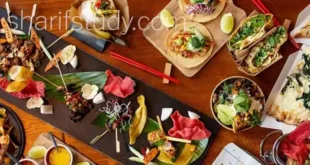
Food and cuisine play an essential role in Malaysian culture, symbolizing the vibrant diversity and rich heritage of the country. The culinary landscape of Malaysia is a melange of flavors, deeply influenced by the ethnic Malay, Chinese, and Indian communities that constitute the majority of the country’s population.
Each of these communities brings distinct culinary traditions, ingredients, and cooking methods, resulting in a gastronomic tapestry that reflects the multicultural nature of Malaysia. From the spicy and aromatic Nasi Lemak, the national dish of Malaysia, to the complex flavors of Indian-inspired roti canai and the traditional Chinese bak kut teh, food is an embodiment of the multicultural dialogue that has shaped the nation.
Moreover, food in Malaysia extends beyond simple nourishment, playing a crucial role in social interactions and celebrations. Sharing a meal is often a communal activity, signifying unity and fellowship.
Traditional dishes take center stage during festive occasions like Hari Raya, Chinese New Year, and Deepavali, acting as cultural markers and reinforcing communal identities. Simultaneously, the shared love for food transcends ethnic boundaries and cultivates a sense of national identity. Street food culture, in particular, symbolizes the blending of cultures, where a myriad of food stalls offer an assortment of dishes from different ethnic communities side by side.
Thus, food, in the Malaysian context, serves as a unifying factor, a means of cultural expression, and an essential component of the national identity. For famous dishes by community, from nasi lemak to bak kut teh, see our guide to Malaysian cuisine.
Malaysian Arts
Traditional Malaysian art primarily centers on carving, weaving, and silversmithing. It ranges from rustic handwoven baskets to the intricate silverwork found in Malay palaces. Artisans commonly create decorative kris (daggers) and betel-nut sets.
They produce luxurious Songket textiles, in addition to traditional Songket and batik fabrics. The natives of East Malaysia are famous for their wooden masks.
Before the 1950s, Islamic taboos restricted the depiction of humans and animals, which limited the development of Malaysian art. Artists often embroider textiles such as batik, songket, Pua Kumbu, and tekat with a painting or pattern for decoration.
In East Malaysia, artisans use leather and beads to create impressions similar to gold and silver adorned with stones.
Artisans in many regions create earthenware. They fashion the Labu Sayong, a clay water container, to resemble a gourd, which is famous in Perak. They also shape the angular Terenang to hold water.
The belanga, a broad-based cooking vessel made from clay, allows heat to distribute evenly. Many items, including doors and window panels, feature carved wood embellishments.
People have always regarded wood carving as an art rather than a business. Traditional woodcarvers, upholding the belief that they must ideally suit their material, would dedicate years to just preparing the wood. They performed woodcarving as a highly ritualized act, ensuring the wood perfectly matched the client.
Malaysian Architecture
Malaysian architecture incorporates a mix of styles, including Islamic, Chinese, and European colonial influences, which have collectively evolved Malay architecture. Northern homes resemble those in Thailand, while southern homes align more with Javanese styles.
Europeans introduced new materials like glass and nails, leading to changes in the architecture. To adapt to tropical climates, Malaysians construct houses on stilts with high roofs and large windows to enable air circulation and interior cooling.
Throughout most of its history, Malaysia has predominantly used wood as a construction material, ranging from simple kampungs to royal palaces.
Traditional dwellings in Negeri Sembilan are constructed entirely without nails. Besides wood, Malaysians commonly use other materials like bamboo and leaves.
The Istana Kenangan in Kuala Kangsar, built in 1926, stands as the only Malay palace with bamboo walls. In East Malaysia, many Orang Asal (indigenous) communities live in longhouses and water communities. Longhouses, raised and built on stilts, can accommodate twenty to a hundred families. Water settlements also rise on stilts, with buildings connected by planks, and boats serve as the primary means of transportation.
Malaysian Music
Traditional Malay music and performing arts are believed to have originated in Kelantan-Pattani. This music relies heavily on percussion instruments, with the gendang (drum) being the most significant. There are at least 14 types of traditional drums.
Artisans often craft traditional drums and percussion instruments from organic materials like shells. Other instruments include the rebab (a bowed string instrument), the serunai (an instrument akin to a double-reed oboe), the seruling (flute), and trumpets.
Musicians traditionally use music for storytelling, marking life-cycle events, and celebrating harvest festivals. In the past, people used music for long-distance communication. The traditional orchestra falls into two types: the gamelan, which uses gongs and string instruments to generate melodies, and the nobat, which employs wind instruments to produce more serious music.
Malaysian Literature
The robust oral tradition that existed in what is now Malaysia prior to the invention of writing continues today. Indian epics profoundly inspired these early compositions. Even after written works emerged, oral literature such as folktales thrived.
The Arabic Jawi script came on the peninsula with the arrival of Islam in the late 15th century. In addition to these foundational elements, imprints of Chinese and Indian traditions weave into the rich tapestry of Malaysia Culture, reflecting the country’s vibrant history of commerce and immigration.
The emergence of the printing press in Malaysia revolutionized access to literature, breaking the barrier that limited literary works to handwritten manuscripts accessible only to a select few.
This development had a profound impact on Malaysia Culture. It created a bridge between the royal Malays, who predominantly spoke English, and the lower classes, who primarily read Malay literature. As the 20th century dawned, the literary landscape began to mirror the evolving social standards of Malaysians.
In a significant step towards categorizing the country’s diverse literary output, the government took the initiative in 1971 to classify literature based on language.
The Malaysian government officially recognized works written in Malay as “The National Literature of Malaysia,” highlighting their critical role in representing the essence of Malaysia Culture.
At the same time, they referred to literature written in other bumiputra languages as “regional literature,” acknowledging the regional diversity within the nation. Finally, literature penned in languages other than Malay or bumiputra languages was classified as “sectional literature,” signifying its specific linguistic and cultural niche.
Clothing in Malaysia
Traditional dress reflects each community. Malay women wear the baju kurung, a loose tunic over a long skirt, and men wear the baju Melayu with a sampin (a short sarong) on festive days. Chinese Malaysians may wear the cheongsam or samfu at Chinese New Year, and Indian Malaysians wear saris, salwar kameez and kurtas, especially during Deepavali. Batik shirts are accepted as formal wear in Malaysia, including at official events.
Most Muslim women in Malaysia wear the tudung, a type of headscarf, and it has become part of a large local fashion industry. In daily life, casual clothing is the norm in cities and on campus, but modest dress (shoulders and knees covered) is expected when visiting mosques, temples and government offices.
Malaysia Sports
In Malaysia, the most popular sports include badminton, bowling, football, squash, and field hockey. Malaysia features traditional sports on a modest scale. Wau is a traditional kite-flying style that involves kites with complex decorations.
These kites can reach approximately 500 meters (1,640 feet) in altitude and produce a humming sound when flown owing to bamboo attachments.
In sepak takraw, players keep a rattan ball in the air without using their hands. During the rice harvest season, people traditionally played gasing, top-spinning with giant tops weighing around 5 kilograms (11 lb).
Players would toss these tops by unfurling a rope and scooping them off the ground as they spun. Some of these tops have been observed to spin for almost an hour. Other sports include dragon dancing and dragon boat racing.
The Malaysian coastline attracts many enthusiasts of scuba diving, sailing, and other water activities. Whitewater rafting and hiking are also popular activities.
Malaysia Media
Malaysia’s media reflects its languages: daily newspapers are published in Malay, English, Chinese and Tamil, alongside national and private TV and radio channels. Historically, many major newspapers had close links to political parties, while online news portals and social media have grown quickly and now offer a wider range of views. For international students, English-language outlets and university news channels are the easiest way to follow local events.
Malaysian Culture for International Students: Everyday Etiquette
Malaysians are generally friendly and patient with newcomers, and a few habits will help you fit in quickly:
- Greetings: a light handshake is common, but some Muslims prefer not to shake hands with the opposite sex; a smile and a nod, or a hand placed on the chest, is a polite alternative.
- Names and titles: use titles such as Encik (Mr) and Puan (Mrs), or Uncle and Auntie for older people in informal settings.
- Food and religion: Muslims eat only halal food and many Hindus avoid beef, so check before offering food or choosing a restaurant for a group.
- Festivals: if you are invited to an open house, accept; it is one of the best ways to experience Malaysian hospitality.
- Language: English works in cities and on campus, but a few words of Malay, such as terima kasih (thank you), are always appreciated.
FAQs
1. What is special about Malaysian culture?
- Their collective cultural emphasis on relationships and people means that they are extremely considerate in most situations. Today, the Malaysian social attitude is built on a desire for democracy, formal education, equal opportunity for all races, and respect for other religions.
2. What is Malaysia cultural value?
- Malaysia has strong Eastern values such as adab and decorum in public, respect for elders, the significance of family, community, and communal harmony, a strong sense of culture, diligence, and respect for authority.
3. What cultural etiquette should international students know in Malaysia?
- Take off your shoes before entering a home, use your right hand to give or receive things, point with your thumb rather than your index finger, dress modestly at places of worship, and avoid public displays of affection. During Ramadan, avoid eating or drinking in front of fasting friends where you can.
4. What are the main festivals in Malaysia?
- The biggest celebrations are Hari Raya Aidilfitri, Chinese New Year, Deepavali, Wesak Day and Christmas, plus harvest festivals in Sabah and Sarawak. Many families hold an “open house” where friends of all backgrounds are welcome; our guide to religion in Malaysia lists the main festivals and public holidays.